THE FEMALE COMPANY | THE TAMPON BOOK | 2020
The Book That Outsmarted the Law—By the Law / THE FEMALE COMPANY "THE TAMPON BOOK"
Sell tampons... as a book. In Germany, period products are taxed at 19%, while caviar, truffles, and books are taxed at only 7%. So why not turn tampons into a book?
The problem
In 2019 Germany, tampons were taxed at the top rate of 19%, while caviar, truffles, and oil paintings were taxed at just 7%. Even as the movement to scrap the tampon tax spread around the world, German politicians weren't budging. The founders of THE FEMALE COMPANY, which sells period products, decided to take this unfairness into their own hands.
The insight
Use a loophole in the tax law to beat the tax law. There was one way to change the tax rate to 7% without changing the tampons themselves at all: sell them as a "book."
The idea
Working with SCHOLZ & FRIENDS Berlin, they packed 15 organic tampons into a 46-page book. The other 45 pages were filled with illustrations and text about periods, taboos, and feminism, along with a petition calling for the tampon tax to be abolished. The book format itself became a tool of protest.
What happened
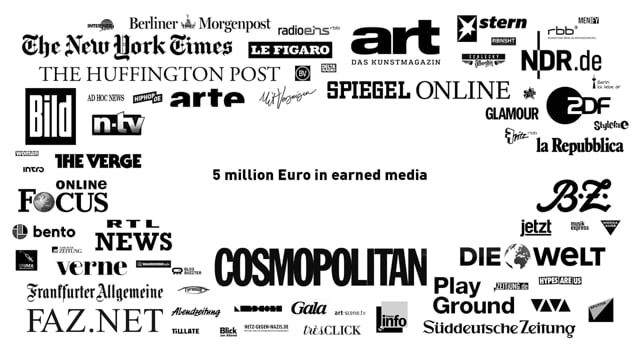
The first print run sold out in a single day, and the second printing sold out within a week. Within a month, the campaign had generated 12 million impressions. Women politicians shared it, and outlets like The Guardian, CNN, and Der Spiegel covered the story. On November 7 (11/7), 2019, Germany abolished the tampon tax. The campaign went on to win the Grand Prix in the PR category at Cannes Lions 2019.
Afterthought
An ad changed a law. Or more precisely, an ad that didn't look like an ad did. A single item that worked as packaging, as protest, and as educational content all at once, functioning on every level. Instead of just venting anger, they used the system's own absurdity to prove how absurd the system was. That kind of cleverness is what really gets me.
Awards
- Cannes Lions Gold 2020
Featured in
- Ads That Reached Into the LawBreaking rules, slipping through loopholes, rewriting statutes — eight ads, ordered by how far they reached.