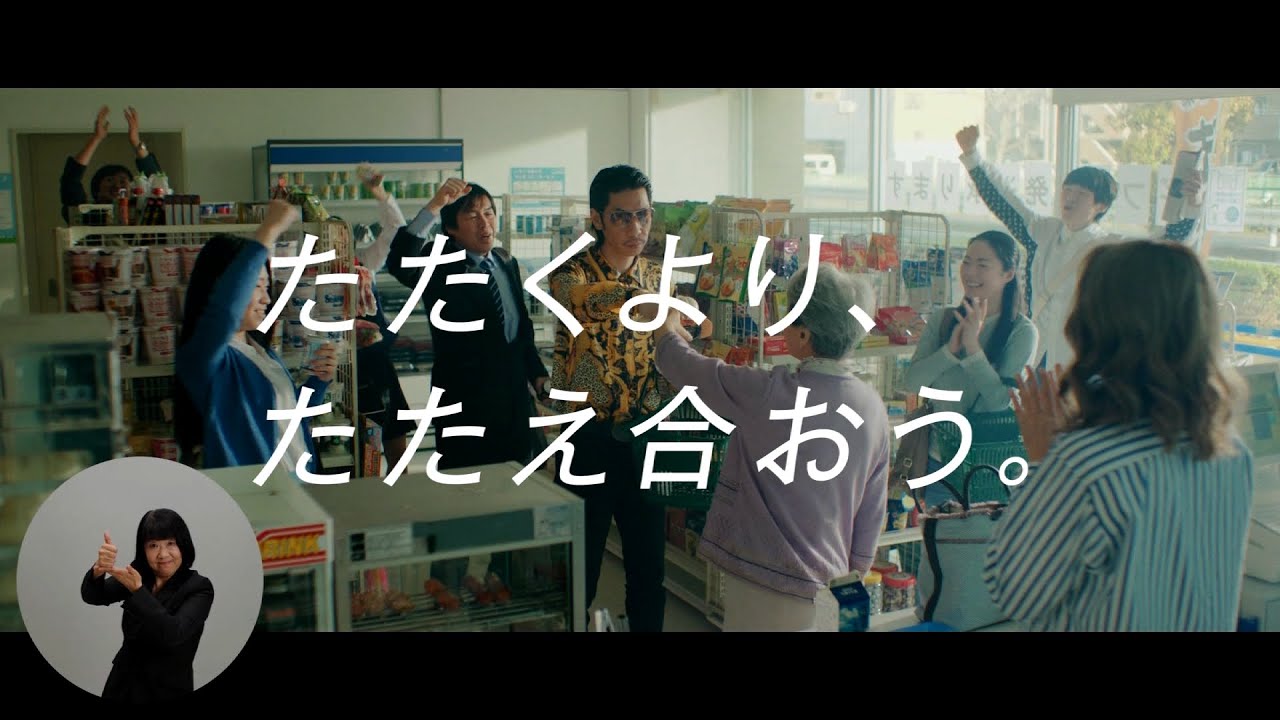
ホットペッパー | アフレコCMシリーズ | 2002
It's All in the Gap Between 'Voice' and 'Class' / HOT PEPPER "Dubbed Commercial Series"
There's a world here that I, not being from Kansai, could never have come up with on my own, and I deeply relate to that. But at the same time, I don't think this is something only a Kansai person could make—I think it's something only one genius, Takaaki Yamazaki, could have made.
The problem
This series started in 2002, was inducted into the ACC Hall of Fame, and had produced 39 commercials by 2007. It made a comeback in 2019 after a 12-year gap, then came back again in 2022—a project that keeps rising from the ashes like a phoenix. It originally launched when the coupon magazine Hot Pepper went national at its founding. Dubbed commercials themselves were still rare back then, and it was considered so revolutionary that some called it "possibly the greatest commercial ever made."
The insight
The person behind it was Takaaki Yamazaki, a creative director at Dentsu's Kansai branch. He's the type of genius whose childhood play turned into his career—apparently as a kid he used to mute the sound on news footage and dub in his own voice for fun. The reason he himself did the dubbing instead of hiring a professional voice actor was reportedly to create a sense of looseness. At first he dubbed it in standard Japanese and the result wasn't quite funny enough, so he switched to Kansai dialect (Yamazaki is from Kyoto)—and it clicked perfectly. In other words, this was a thoroughly engineered design meant to maximize the gap between "dignified footage" and "completely laid-back Kansai dialect."
The idea
The footage was shot overseas, and they went so far as to hold auditions for actors on location—that's how thorough they were. Most of the footage was filmed outside Japan specifically for the commercials, not taken from an actual movie, which backs up the legend that "apparently they dubbed over newly shot footage rather than existing material." Starting with the masterpiece known as the "Tabemashita" ("I Ate It") episode—"You ate the spaghetti, didn't you?" "No I didn't!" "But you've got ketchup on you." "Okay, I ate it!"—and continuing through episodes like "Yorokonde" ("Happy To") and "Mada Bansou" ("Still Accompanying"), every single one follows the same structure: ridiculously high-quality footage paired with completely relaxed Kansai dialect. The strategy behind Yamazaki doing the dubbing himself was also brilliant—it created a sense of something out of place amid all the commercials filled with professional narration, which made viewers stop and take notice.
What happened
Along with the three episodes from '02 when the series began—"Tabemashita," "Sugoi Yan" ("That's Amazing"), and "Hara Tattekita" ("I'm Getting Angry")—the "Mada Bansou" episode ('06) was also inducted into the Hall of Fame. When the series came back, the three newest commercials racked up a combined total of over 1.1 million views, with comments flooding in like "so nostalgic" and "still just as funny." It even left a cultural mark, being widely used as source material for MAD videos on Niconico Douga.
Afterthought
"Every legend has a backstory"—"one that doesn't show on the surface, but that makes perfect sense once you hear it"—I think that's exactly the truth running through this whole series. Behind-the-scenes details like "it was newly shot footage," "that was the planner's own voice," and "the Kansai dialect was decided later" multiply the fun of the work many times over. And this time, through looking into it, I got to learn the story behind this wonderful work, and I fell in love with it all over again. I'll never forget the name Takaaki Yamazaki as long as I live.