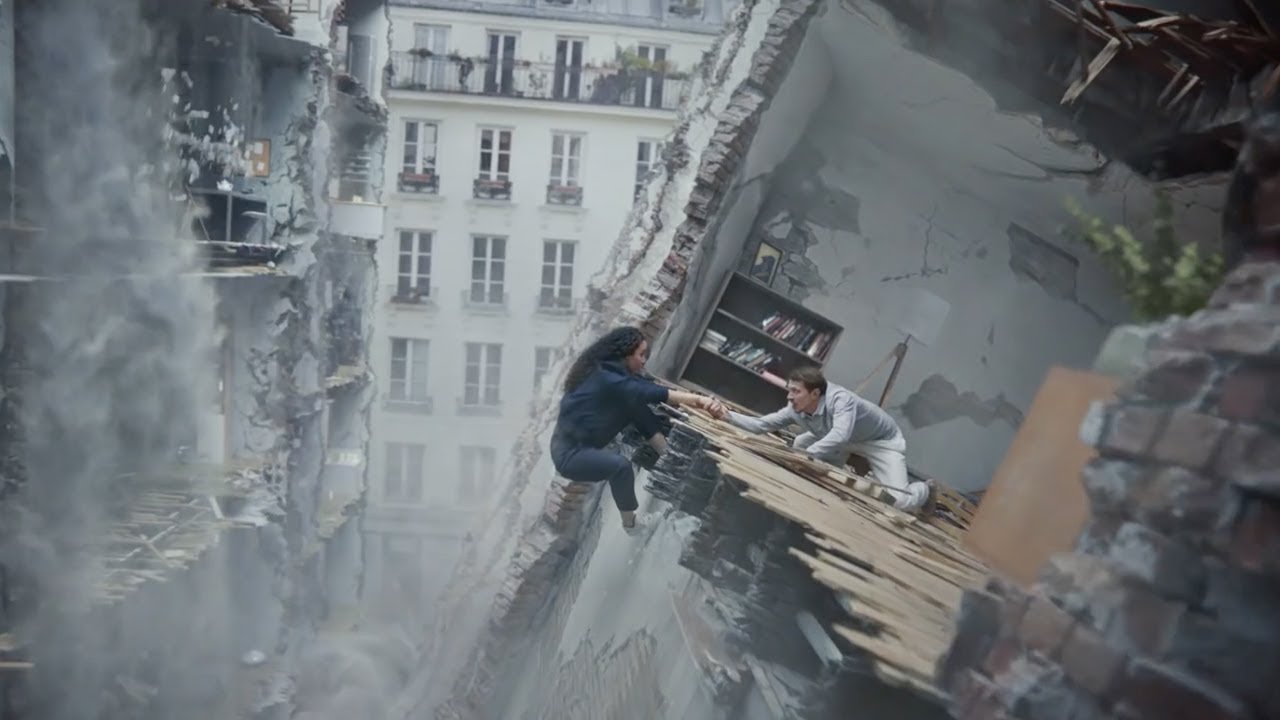
SIEMENS HEALTHINEERS | Magnetic Stories(The Flying Train) | 2024
Turning something scary into something kids love / SIEMENS HEALTHINEERS "Magnetic Stories"
The roar of an MRI machine—louder than a military jet—was transformed so kids would hear robots, flying trains, and spaceships instead. That's just not fair (in the best way).
The problem
MRI scan noise is "so loud and sudden" that children genuinely get scared and move during the scan, which can ruin the image quality and force a repeat scan. The usual fix was sedation, but that made procedures longer, riskier, and more stressful for parents. In Portugal, more than 400 children are diagnosed with cancer every year, with a survival rate of about 85%—but two-thirds of survivors end up with a reduced quality of life due to treatment side effects. As Europe's largest MRI manufacturer, Siemens Healthineers was in a position to change the negative experience its own product was creating.
The insight
Every MRI scan produces its own distinct sequence of sounds, which means you can predict exactly which sound happens when. The team zeroed in on this "sonic inevitability"—turning the beeping of a fast spin echo into a chatty robot, and the steady pumping sound of the helium recondensing pump into the sound of a flying train. The goal wasn't just to remove anxiety, but to create an experience kids would actually love—one that would make them want to come back, instead of dreading the next scan. By putting humanity at the center and combining it with beautiful storytelling and craft to take the fear out of the experience, it became a perfect fusion of technical innovation and human understanding.
The idea
The team collected the sound sequences from the most common pediatric MRI scans (head, liver, spine, sella turcica, and ear), then worked with a well-known children's book author and sound designers to create audiobooks where every moment of the story was perfectly synced to each sound in the scan. Working with Leya, one of Portugal's leading children's book publishers, they brought something kids already loved into a frightening experience. The author created the stories in December 2023 (12/2023); sound design and testing took place in February 2024; and in March 2024 (3/2024), the team worked with radiologists at CUF to integrate the audiobooks into each MRI scanner, fine-tuning the timing so each audiobook matched perfectly with its corresponding MRI.
What happened
The program launched in April 2024 (4/2024) across CUF, Portugal's largest hospital network, rolling out to all 25 facilities. The next step is expansion into Spain, using the Iberian Peninsula as a launchpad before moving into Germany, Italy, the UK, and beyond. The stories have also made their way beyond hospital headphones and into homes via tablets, and are now available on Kobo's online store. The campaign won the Grand Prix in the Pharma category at Cannes Lions, multiple top awards at the Clio Awards, Best in Show at the Healthcare Marketing Impact Awards, and was shortlisted at the D&AD Awards. It positioned a healthcare company at the forefront of innovation and set a new bar for the industry, serving as a call to action for other industries as well.
Afterthought
"Children hate being cancer patients. But they love stories." That one line says it all. In a world where technical problems are so often met with nothing but more technology, I'm moved by an approach that tackled the problem with creativity focused on the emotional experience instead. Not "erasing" the scary sound, but "turning" it into a sound kids love—that shift in thinking is something every person in advertising should remember. Everyone assumed you couldn't turn a hospital into a theme park, but Siemens Healthineers got dangerously close. And honestly, it makes me want to go change something too.
Awards
- Cannes Lions Grand Prix 2024