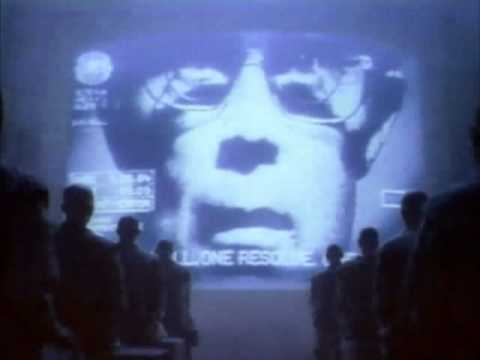
Apple | Think Different | 1997
More Meaningful Than Any Self-Help Book / Apple "Think Different"
In 1997, Jobs returned to an Apple that was on the brink of bankruptcy, and what he put out into the world wasn't a new product or a discount—it was just two words. "Here's to the crazy ones"—this 60-second tribute to crazy people became more than an ad; it became a declaration.
The problem
At the time, Apple was deep in financial trouble. When an internal proposal came in with the line "We're back," Jobs, who had just returned to the company, rejected it, saying "We're not back yet." Instead, TBWA\Chiat\Day put together "Think Different." In September 1997, Jobs unveiled it for the first time at an internal company meeting.
The insight
The phrase was proposed by art director Craig Tanimoto as a counter to IBM's "Think IBM." "Think Different" is grammatically incorrect, but Jobs pushed it through as-is, treating it like a colloquial phrase similar to "think big." There was no intention to sell products—only the resolve to remind fans why Apple had once been great.
The idea
The copy was written by Siltanen and Clow, with Segall also contributing. The team had originally hoped for Robin Williams to do the narration, but couldn't reach him, so it went to Richard Dreyfuss, who was an Apple fan. A version narrated by Jobs himself was also recorded but never aired—on the morning the ad was set to air, Jobs chose the Dreyfuss version.
What happened
On September 28, 1997 (9/28/1997), the 60-second spot aired during a broadcast of "Toy Story," and print ads ran in major magazines as well. The campaign won an Emmy Award in 1998 and a Grand Effie Award in 2000, and continued to be used until 2002.
Afterthought
This would definitely make my top ten list of ads to bring to a desert island. "Because the people who are crazy enough to think they can change the world are the ones who do"—who could stay unmoved in front of a line like that? When I later heard the version narrated by Jobs himself, I honestly got chills. The reason this hasn't faded even after 20 years is that it wasn't made for the advertiser's convenience—everyone involved in making it meant it, completely.