NISSIN FOOD | HUNGRY? III UINTATHERIUM | 1994
30 years later, your stomach still remembers / NISSIN FOOD "HUNGRY? III UINTATHERIUM"
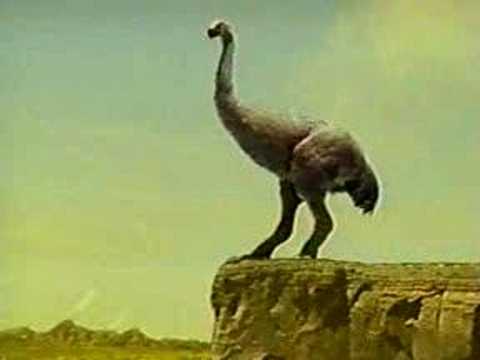
This is the Uintatherium installment, from 1994. It's part of the era when the series that had already stunned the world with mammoths and moas was still going strong. A caveman gets tossed around by a giant mammal, but in the end there's just the word "hungry?" and that white cup with red. By now this rhythm needs no explanation. It's one of the sequels in the series that won the Grand Prix at Cannes as a whole and became a landmark in Japanese advertising history.
The problem
The "hungry?" series started in 1992, stunning people with digital visuals they'd never seen before, and it aired through 1995. Cup Noodle was already a product every single person in Japan knew, so there was no need for the commercial to spell out what the product actually was. The mission instead was to make consumers feel that Nissin Food was a company with its own unique creativity. "Hungry?" was planned as a concept that could work anywhere in the world, and its simple, bright humor became a huge hit, airing in Europe, Hong Kong, and Brazil too. This 1994 Uintatherium installment came in the middle of the series.
The insight
Hakuhodo art director Takuya Onuki came up with the idea of setting things in prehistoric times to tackle a big theme for humanity: being "hungry." The project was named "One Million Years of Appetite," built on the insight that humans have been voraciously hungry for a million years and nothing's changed. We live in an age where you can get food in three minutes without risking your life hunting for it—and that contrast gets drawn out through a chase between a caveman and a giant mammal. The copy isn't "buy this" or "it's delicious"—it's a question, "hungry?" So instead of being told what to do, you end up growling your own stomach. That sly move of handing the subject of the ad from the company over to the viewer is what makes the series light on its feet and strong.
The idea
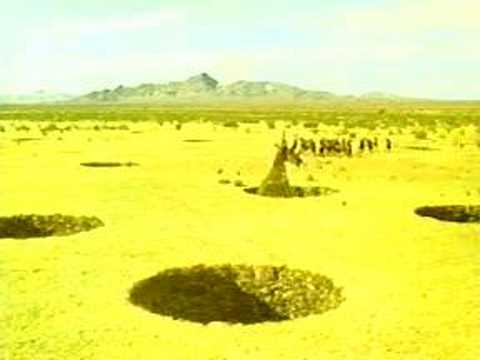
The original wish was to shoot everything live-action, but that would have required an enormous budget. So director Shinya Nakashima of TOHOKUSHINSHA, who was already working with digital editing technology, was brought in to turn Onuki's vision into reality. The color of the sand, the running feet, the sand kicked into the air, and the white-and-red cup. Instead of saying a lot, the same symbols get placed over and over, burning the brand into your eyes. The sparseness of sound actually pulls the memory in harder (footsteps, breathing, and then one voice: "hungry?"). That "hungry?" voice belongs to Animal Lesley—a single call that seems to brush past the line between human and beast, driving a wedge into the minimal visuals. Every time, the entrance is the same (sand, prey, the dash). The exit is the same too (hungry? → the cup). But the path in between is different each time—that's where the pleasure of watching the series comes from.
What happened
The series that started in 1992 won the Grand Prix at the 1993 Cannes International Advertising Film Festival (the 40th edition) with both the Synthetoceras installment and the Moa installment. Apparently, at the first screening, the person in charge at Nissin Food was stunned and said something like "what is this?"—but as it turned out, 30 years later this commercial hasn't faded at all, and plenty of people still remember it clearly. Through this campaign, Hakuhodo drew attention at Cannes, proving that Japanese advertising could hold its own in the world through the power of humor and imagery.
Afterthought
Drop the explanation, keep only the password. That's the true essence of the "hungry?" series. The 1994 Uintatherium installment sticks closely to that formula while refreshing the surprise with a new prehistoric mammal. A brand that has a "formula" like this for its series is strong. It can light the spark again and again, and it always feels good.
Awards
- Cannes Lions Gold 1994